02 · Forest, Wildlife & Biodiversity

Forest, Wildlife & Biodiversity Intelligence

Phyterra combines satellite intelligence, drone monitoring, GIS analytics, and ecological science to help governments, conservation organisations, research institutions, and NGOs protect forests, conserve wildlife, and restore ecosystems at scale.

Dense tropical forest canopy for biodiversity monitoring
Forest Intelligence · Live Monitoring Active
120+
Forest Landscapes Assessed
85+
Biodiversity Projects Delivered
40+
Protected Areas Monitored
200+
Wildlife Intelligence Reports
30+
Conservation Programs Supported

Sector Brief

Why Biodiversity Intelligence Matters Now

The planet is losing biodiversity at a rate unprecedented in human history. Deforestation, habitat fragmentation, invasive species, and climate change are dismantling ecosystems that underpin food security, water supply, and climate stability. Yet most conservation programmes still operate with incomplete spatial data, fragmented field records, and limited capacity to quantify restoration impact.

Integrating satellite intelligence, UAV-based ecological surveys, multispectral analysis, and GIS-driven biodiversity assessment transforms how organisations plan, implement, and monitor conservation action. Phyterra's forest intelligence platform delivers the visibility needed to allocate resources precisely, demonstrate measurable impact, and build resilient ecosystems at landscape scale.

Challenges We Solve

Six Critical Problems in Conservation Intelligence

Forest Cover Change Detection

Deforestation and degradation often go undetected for months. Our near-real-time satellite monitoring flags canopy loss events, encroachment, and illegal clearing within days of occurrence.

Habitat Fragmentation Analysis

Fragmented landscapes isolate wildlife populations and reduce genetic diversity. Phyterra maps connectivity corridors, patch dynamics, and edge effects to inform landscape-level conservation planning.

Wildlife Monitoring Challenges

Traditional field surveys are costly, infrequent, and geographically limited. Drone-based acoustic and thermal monitoring, combined with AI species identification, extends coverage across remote and inaccessible habitats.

Biodiversity Visibility Gaps

Many critical ecosystems lack baseline biodiversity data. Multispectral analysis and habitat suitability modelling generate species-level distribution insights even where field access is severely constrained.

Ecosystem Restoration Planning

Restoration investment is often misallocated without spatial prioritisation. Our ecological intelligence models identify highest-value restoration zones based on biodiversity value, carbon potential, and hydrological function.

Conservation Impact Measurement

Funders and policymakers require verifiable outcomes. Phyterra's monitoring frameworks provide longitudinal evidence of habitat recovery, species return, and ecosystem resilience improvement over time.

Intelligence Architecture

Core Intelligence Areas

01

Forest Intelligence & Monitoring

Real-time and time-series satellite monitoring of forest cover change, canopy structure, and landscape dynamics across protected and unprotected areas.

Forest Cover Mapping Deforestation Monitoring Forest Health Assessment Landscape Change Detection
02

Wildlife & Biodiversity Analytics

Species-level monitoring, habitat suitability modelling, and wildlife corridor mapping that transforms fragmented field observations into landscape-scale biodiversity intelligence.

Species Monitoring Biodiversity Assessment Habitat Suitability Analysis Wildlife Corridor Mapping
03

Ecosystem Restoration & Conservation Intelligence

Science-based restoration prioritisation, protected area performance analytics, and ecological resilience modelling that helps conservation organisations demonstrate and scale measurable impact.

Restoration Planning Protected Area Management Ecological Resilience Conservation Impact Analytics

Applications

Industry Use Cases

Protected Area Management

Real-time encroachment alerts, patrol optimisation, and habitat condition monitoring for national parks, wildlife sanctuaries, and biosphere reserves.

Wildlife Conservation Programs

Population monitoring, range analysis, and corridor intelligence for flagship and endangered species conservation programmes.

Biodiversity Action Plans

Baseline assessments, indicator species mapping, and target-setting support for national and subnational biodiversity strategies aligned with the Kunming-Montreal framework.

Forest Restoration Projects

Site suitability analysis, restoration progress tracking, and ecosystem recovery verification for large-scale reforestation and rewilding initiatives.

Environmental NGOs & Research Institutions

Spatial data products, ecological modelling, and conservation analytics for NGOs conducting applied biodiversity research and landscape-level conservation programmes.

Nature-Based Climate Solutions

Carbon stock mapping, ecosystem integrity scoring, and co-benefit quantification for REDD+, voluntary carbon market, and nature-based investment programmes.

In Practice

Biodiversity Intelligence in Action

Aerial drone view of tropical forest canopy monitoring

Monitoring

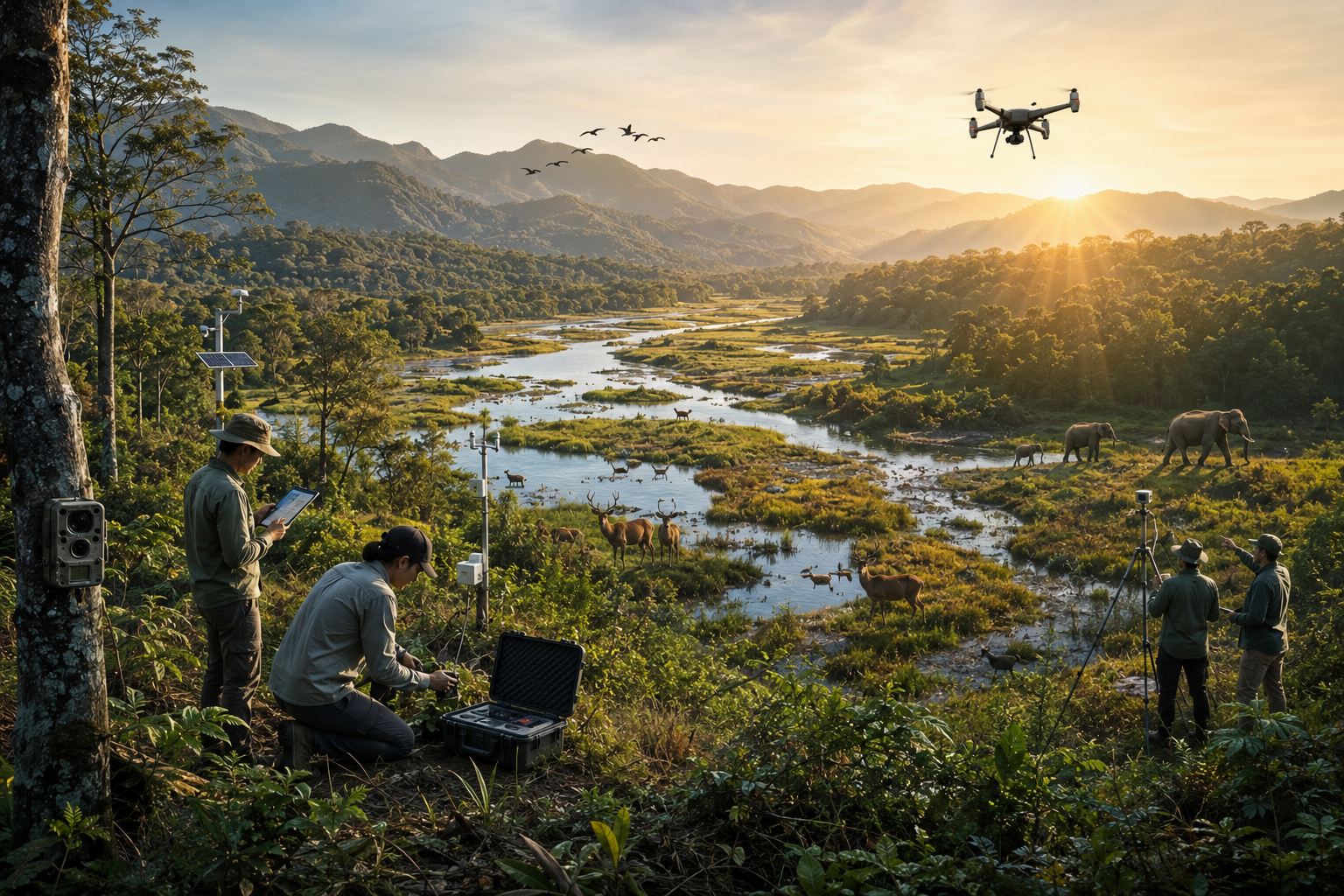
Continuous satellite-based forest monitoring, UAV wildlife observation programmes, and sensor-driven habitat condition assessments provide uninterrupted ecosystem health tracking across vast and remote landscapes.

Analytics

Biodiversity modelling, species distribution analysis, landscape connectivity assessment, and conservation performance evaluation convert raw spatial data into decision-ready ecological intelligence.

Decision Support

Conservation planning tools, restoration prioritisation frameworks, protected area management dashboards, and biodiversity policy analytics translate intelligence into measurable on-ground outcomes.

Results

Outcomes Delivered

Improved Biodiversity Visibility
Enhanced Forest Monitoring Coverage
Better Wildlife Conservation Outcomes
Reduced Habitat Loss Risks
Improved Ecosystem Restoration Planning
Stronger Conservation Governance
Better Protected Area Management
Data-Driven Biodiversity Decisions